
Born in Houston, Texas, in 1935, he is an absolute legend in American fashion history.
The Genesis of a Sartorial Saboteur
A career in fashion wasn't a choice for Costa; it was a destiny written in the stars and stitched into handmade paper doll clothes in Houston’s Fifth Ward. We see the echoes of his Italian-American heritage in every bold silhouette, a man who transitioned from selling prom dresses to classmates to studying at the École de la Chambre Syndicale de la Couture Parisienne.
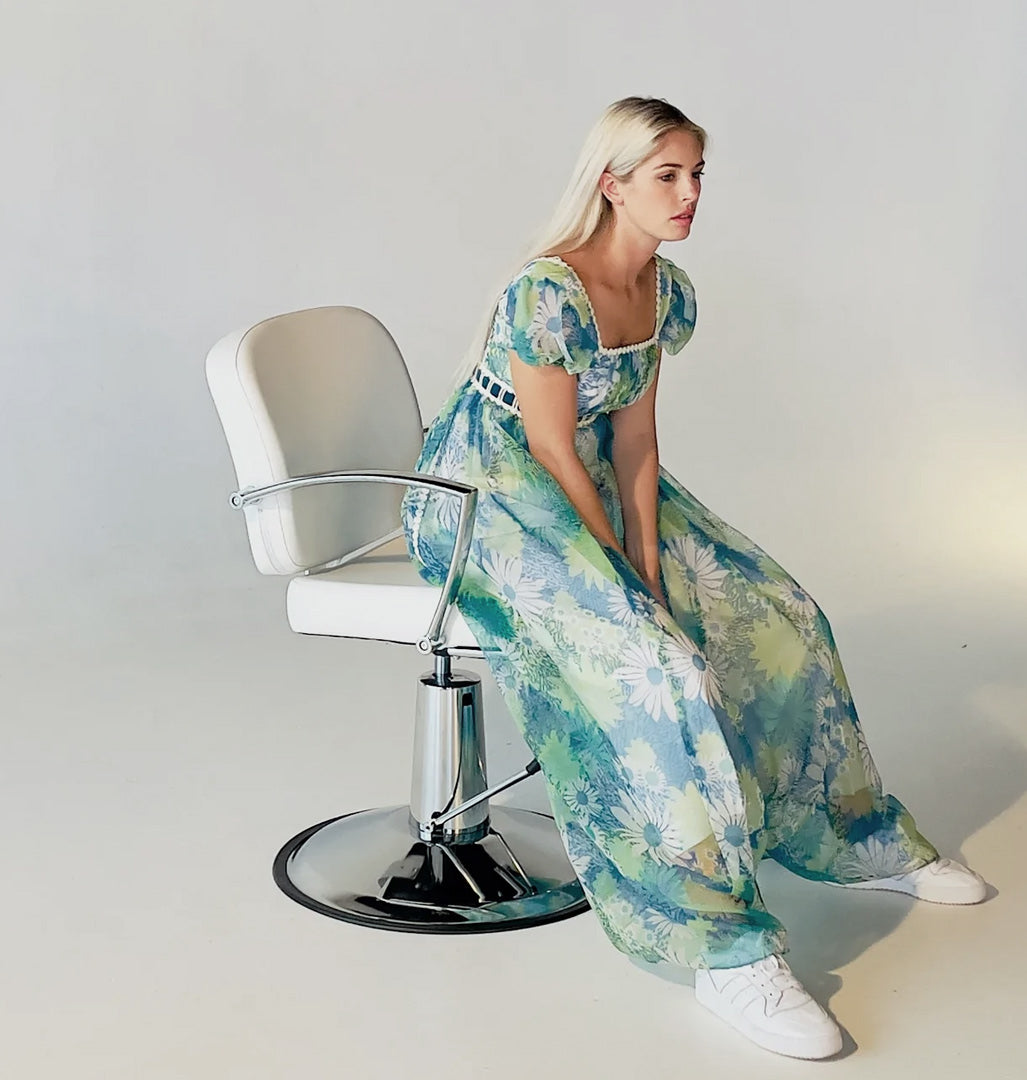
Perhaps his most delicious act of defiance occurred in 1958, when he wed his high-school sweetheart in a gown crafted from a pattern smuggled directly out of Christian Dior’s atelier. This wasn’t just a wedding; it was a manifesto. It established the Costa DNA: a heady cocktail of sartorial drama, feminine florals, and those unapologetic flounces that still haunt our dreams today.
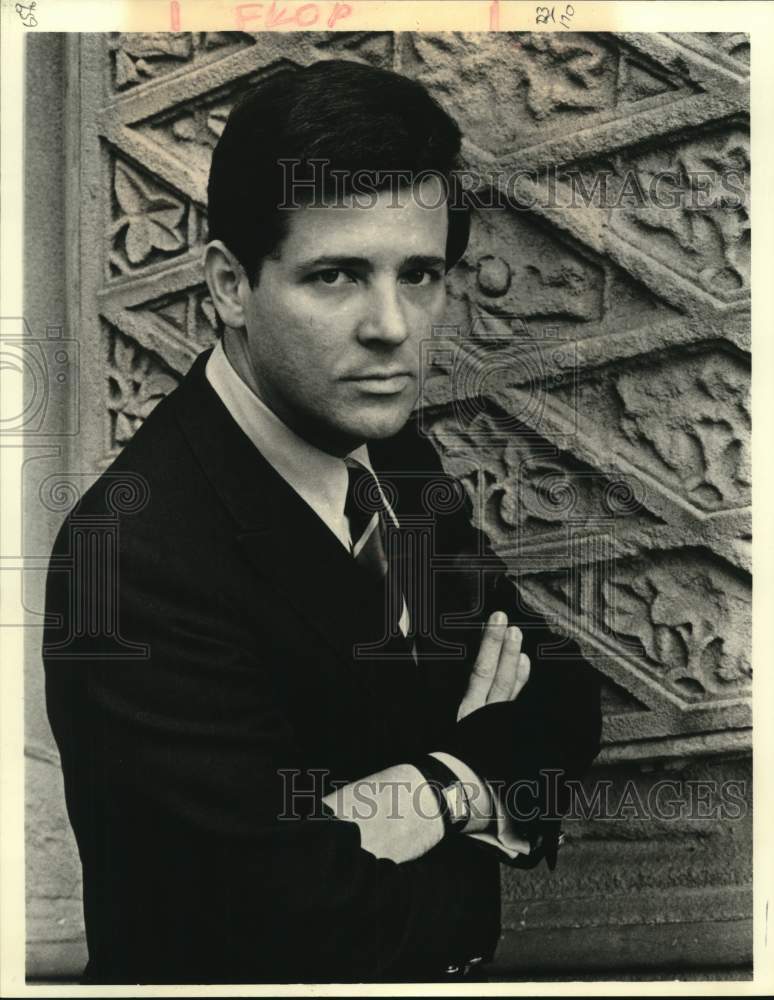
Courtesy of Historic Images (photograph for sale)
The Art of the "Caution" and the High-Fashion Echo
In 1965, while the world was obsessing over the youth-quake, Costa was refining his craft as the secret weapon for Suzy Perette. This was the era of the "caution", a hefty fee paid to Parisian houses for the "privilege" of sketching their designs. Costa, armed with a photographic memory and a wicked sense of irony, didn't just copy; he translated the language of French Haute Couture into the vernacular of the New York streets.
-
The Look: Line-for-line elegance at a fraction of the cost.
-
The Fabric: Moving from heavy silks to the dawn of high-performance synthetics that mimicked the drape of the masters.
-
The Shift: By 1968, his brilliance birthed Romantica, a label that eventually devoured 90% of the company’s sales.
The Dallas Metamorphosis: From Plus-Size to Power-Puff
In 1973, driven by a father’s devotion and a mogul’s instinct, Costa traded Seventh Avenue for Dallas. He didn't just move; he conquered. By acquiring a local plus-size manufacturer and breathing his high-octane glamour into its lungs, he birthed the Victor Costa label.
In a city flush with "new money" and a desperate thirst for debutante drama, Costa became the high priest of the Texas socialite. He understood a fundamental truth we still live by at ClosetBlues: a woman doesn't just want a dress; she wants an entrance that silences the room.
The "Dynasty" Era: High-Octane Knockoffs
As the Texas oil boom flickered, Costa’s genius burned brighter. He recognized that while the bank accounts were shrinking, the egos were not. He became the master of the "democratic couture," crafting exquisite, inexpensive echoes of Karl Lagerfeld, Christian Lacroix, and Bill Blass.
-
The Aesthetic: Exuberant maximalism. Think puffed sleeves, heavy ruching, and skirts with enough volume to command their own zip code.
-
The Fabric: Shimmering taffetas, stiff organzas, and the relentless glow of lamé.
-
The Cultural Apex: His designs didn't just hang in closets; they lived on screen. From the shoulder-padded warfare of Dynasty and Falcon Crest to the backs of icons like Whitney Houston and Ivana Trump, Costa was the architect of 80s excess.
"The word 'fashion' would not exist if there were no copying." Victor Costa
We adore his unapologetic stance. Even when he was being tossed out of Neiman Marcus for "lurking" at an Oscar de la Renta show, he remained the provocateur. He knew that fashion is a conversation, and sometimes, you have to repeat a beautiful sentence to make it your own.
Pattern & Style: The Anatomy of an Icon
Defining the "Costa" Look
-
The Silhouette: The "Inverted Triangle." Broad, structured shoulders tapering into a cinched waist, the ultimate silhouette of feminine authority.
-
The Pattern: Bold, oversized florals and baroque swirls that refused to be ignored.
-
The Evolution: By 1994, he had come full circle, "knocking himself off" for the masses at J.C. Penney, proving that luxury is a feeling, not just a price tag.
It is fascinating to look into the specific pieces he replicated, because it really shows how bold his "copycat" strategy was. He wasn’t just doing vague interpretations; he was doing precise, "line-for-line" copies of the most prestigious European couture houses.
Here are some of the most famous examples and designers Victor Costa knocked off:
-
The Christian Dior Wedding Dress (His First Major Copy) Before he even had a formal business, Costa made his high school sweetheart’s wedding gown in 1958. He didn't design it from scratch, though, he used a pattern that his classmates at the École de la Chambre Syndicale de la Couture Parisienne had literally smuggled out of Christian Dior’s atelier in Paris.
- The Christian Lacroix "Pouf" Dresses In the late 1980s, Christian Lacroix shocked the fashion world with his extravagant "le pouf" dresses (massive, voluminous bubble skirts and bold colors). Costa immediately flew to Paris, bought the originals, dismantled them to study the construction, and recreated the exact silhouettes. He sold these Lacroix copies at Neiman Marcus and Bergdorf Goodman for a fraction of the price. Lacroix famously told Women's Wear Daily, "We love Mr. Costa. He copies very well."
- The Arnold Scaasi Voluminous Ballgowns Arnold Scaasi was known for dressing First Ladies and socialites in massive, highly structured, unapologetically loud evening gowns. Costa was obsessed with this "Texas-sized" aesthetic and frequently knocked off Scaasi's dramatic, oversized ruffles and wide skirts to sell to the Dallas debutante and oil-money crowd.
- The Infamous Tuxedo Dress Dispute (Bernard Perris vs. YSL & Ralph Lauren) In 1994, there was a massive legal and media dispute between Yves Saint Laurent and Ralph Lauren over a specific tuxedo dress design. In the middle of this high-fashion feud, Victor Costa chimed in and pointed out that neither of them had come up with it—he had actually already designed and sold that exact tuxedo dress in 1990 as a direct copy of a look by the Parisian designer Bernard Perris.
- The "Suzy Perette" Era (Balenciaga and Chanel) Before starting his namesake brand, Costa was the in-house designer for Suzy Perette from 1965 to 1973. This New York label would legally pay a "caution" fee of several thousand dollars to Paris couture houses (like Chanel and Balenciaga) to attend their shows and sketch their designs. Costa used his photographic memory to produce exact line-for-line copies of Chanel suits and Balenciaga shifts, which Suzy Perette then sold for as little as $40.
The High Art of the "Knock-Off"
Long before fast-fashion became a dirty word, the "knock-off" was a prestigious rite of passage. We find it deliciously ironic that the foundations of American style were built on the "stolen" silhouettes of France. Legends like Hattie Carnegie didn't just copy; they curated, nurturing titans like Norman Norell in an environment where reinterpretation was the highest form of flattery.
The Lag and the Leak: A Pre-Digital Chase
In the post-WWII era, the world moved at a more seductive, languid pace. Photographs from the Paris couture shows would eventually bleed into newspapers, but the lag time was a chasm that only the quick could cross.
-
The Strategy: Buyers and designers would flock to Paris, not just to watch, but to "buy a model", a physical blueprint of a dream, to be dissected and reborn in New York.
-
The Weapon: When Costa returned from Paris in 1959, he didn't just bring luggage; he brought a photographic memory. He was a human Xerox machine with the soul of an artist.
-
The Execution: For Suzy Perette, Costa translated the avant-garde whispers of the French runways into the bold, wearable shouts of the 1960s. He was the bridge between the unattainable and the essential.
Fabric & Pattern: The Alchemy of Translation
To turn a multi-thousand-dollar couture gown into a successful New York ready-to-wear piece required a specific kind of material genius.
-
The Shift in Textile: Substituting heavy, silk-weighted crepes with more resilient rayon blends and early synthetics that maintained the architectural integrity of the original design.
-
The Pattern Logic: Simplification without loss of soul. Costa knew how to strip a Dior pattern down to its core geometry while keeping the "frou-frou" factor that made a woman feel like a million dollars for a mere forty.
The Historical Echo: Why "Copying" is the Future
If we look at the evolution of trends, we see a recurring theme: The Democratization of Glamour. Just as Costa bypassed the "lag time" of the 1950s, today’s digital landscape has eliminated lag entirely.
Our Predictions: The "Archival Heist" Trend
We predict a shift toward what we call "Hyper-Referentialism." As the industry becomes saturated with "newness," we see a return to:
-
The Silhouette Steal: Expect 2026 to embrace the "Perette Waist", that ultra-cinched 1960s midsection paired with a structured, architectural skirt.
-
The Sketch Aesthetic: A resurgence in Toile-inspired prints and hand-sketched floral patterns that evoke the frantic energy of a designer sketching in a darkened Paris showroom.
-
The Intellectual Rebrand: We are moving away from mindless copying toward "reverent sampling." Much like a DJ samples a beat, we predict designers will openly "sample" iconic structural elements from the 50s and 60s, blending them with technical, futuristic fabrics like recycled bonded nylons.
At Closet Blues, we don't just follow trends; we study the fingerprints of those who created them. We believe that to be original, one must first master the art of the beautiful heist.
0 comments